Wireline is usually thought of as a formation evaluation service, but there are situations where drilling operations depend on it directly. These are the moments when unplanned downhole events or contractual contingencies turn wireline into a drilling support tool, with rig time and operational risk immediately in focus.
Most wells are drilled without needing wireline for anything other than planned evaluation runs. In that sense, drilling and wireline often sit in separate operational lanes: one focused on getting the well safely to depth, the other focused on measuring the formation once the hole is ready.
However, there is a less discussed category of wireline work that sits much closer to drilling execution. These are the interventions and contingencies where wireline is run not to evaluate the reservoir, but to help drilling regain control of the wellbore, complete mechanical objectives, or recover from a problem that has already developed.
This is where wireline becomes, in practice, a drilling support service.
Drilling Support Wireline Is Often Not “Logging”
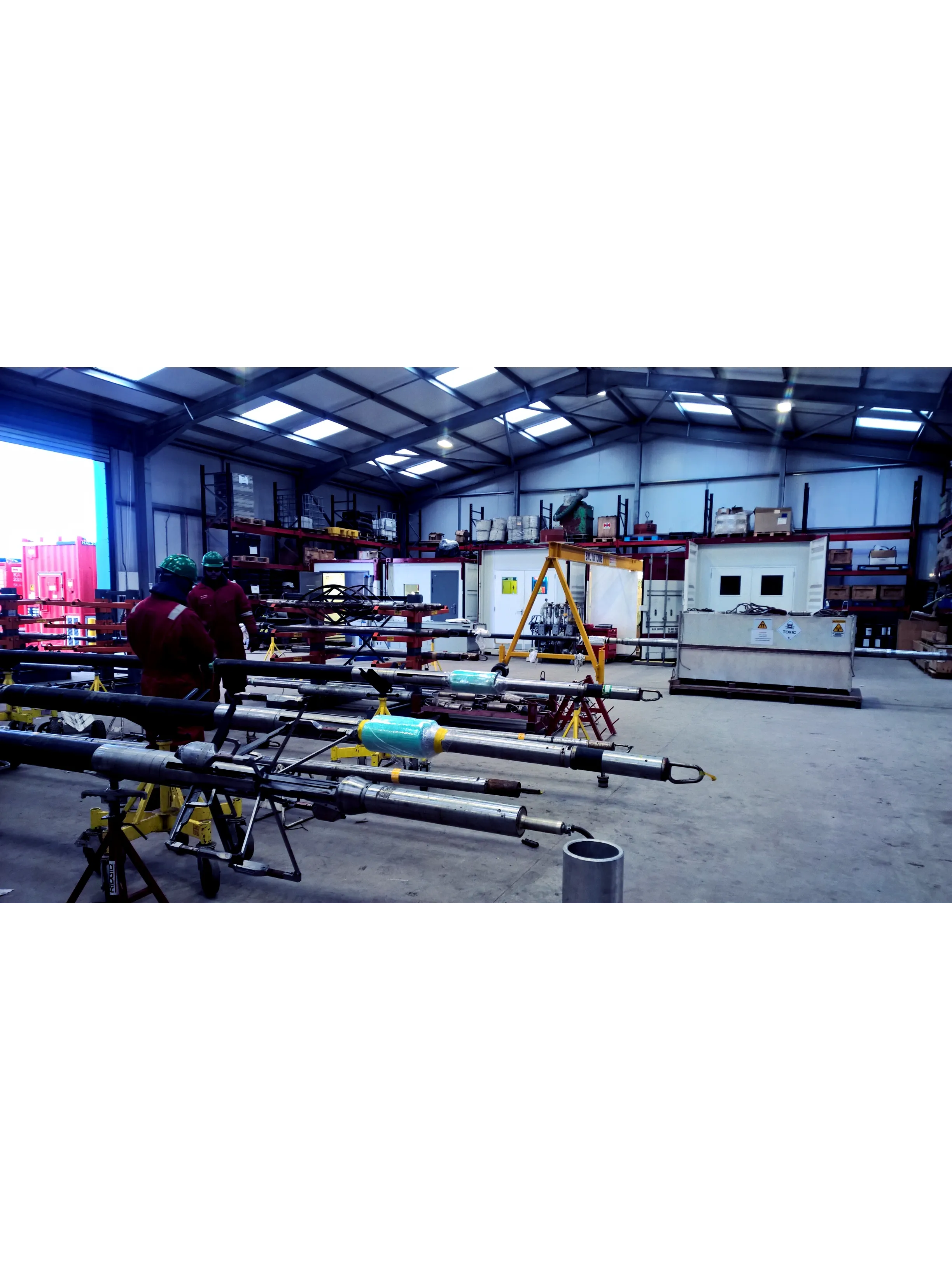
The list of typical drilling support equipment makes that distinction clear. Many of the tools involved are not measurement tools at all. They are operational devices: severing cutters for drillpipe, free-point and backoff equipment, tubing punches, drill collar perforators, fishing assemblies, collar locators, and specialised entry systems for running wireline through the drillstring.
These are rarely part of routine formation evaluation discussions, yet they are part of the contractual backbone of many drilling programmes.
Severing equipment, for example, is required in specific cutter sizes matched to drillpipe and drill collar IDs, together with detonators and explosive logistics. Free-point tools must be capable of registering stretch and torque correctly at the relevant pipe dimensions. Backoff capability requires shooting bridles, primacord, monocable heads, and collar locators.
This is not about logging. It is about mechanical recovery.
Planned Contingencies vs Unplanned Realities
Some drilling support wireline activities are planned in advance, and in those cases they tend to sit more cleanly inside the programme.
Tubing punch operations, for instance, are sometimes expected where test strings require limited-entry access without damaging casing or drillpipe. Similarly, squeeze guns and perforating packages can be part of known cement remediation requirements. Gamma pip tags may be planned for later depth correlation during well testing.
These are not emergencies. They are foreseeable requirements that can be built into scope, logistics planning, and explosive permitting.
The greater operational exposure tends to come from the unplanned side of the list.
Logging while fishing is one example where the requirement is explicitly noted as having “no callout planned.” Free-point and backoff services are only needed once a pipe string is already stuck. Wireline fishing operations, junk basket runs, gauge ring checks, and drill collar perforation are rarely scheduled activities, even though they appear in many contracts as contingencies.
In those cases, the wireline requirement does not arrive neatly as part of the plan. It arrives as a consequence.
When those contingencies have not been fully thought through in advance, the response can become difficult very quickly: tool availability, explosive transport restrictions, missing crossover subs, or uncertainty about who actually owns the scope.
This is not a failure of competence. It is simply how operational complexity sometimes falls between departments.
The Cost of Not Being Ready Is Measured in Rig Time
The immediate repercussion of an unplanned wireline contingency is nearly always lost rig time.
Sometimes that lost time is manageable. On a land rig with strong local service infrastructure, mobilisation may be hours rather than days.
In other environments, the consequences scale rapidly. Offshore spreads are the obvious example, where daily costs can become extremely high once the full marine, service, and standby system is included. Even in the mid-2000s, offshore deepwater spread costs were commonly discussed in the range of several hundred thousand dollars per day, and in many cases higher depending on vessel and service intensity.
In geothermal drilling, the challenge is often different but equally real. Fewer specialist wireline bases, fewer explosive permits in-country, and less predictable wellbore behaviour can make an unplanned contingency harder to close out quickly.
Even when the rig rate itself is lower, the logistical friction can be greater.
A cutter that is sitting in another country, or an explosive shipment that cannot be cleared rapidly, turns a downhole contingency into a schedule event.
Wireline Through the Drillstring: A Good Example of “Support” Scope
One of the more specialised planned support requirements is wireline entry through the top drive using TEAS systems. This allows wireline tools to be run through the drillpipe while still maintaining circulation and rotation capability, with packoff pressure control and even line cutting capability built into the hardware.
This is not something that can be improvised at short notice. It requires specific rig interface equipment, defined planning, and clear responsibility well ahead of execution.
It is a good example of how drilling support wireline sits at the intersection of drilling mechanics, pressure control, and service delivery.
Where Independent QA/QC Fits
The practical reason independent wireline assurance matters in this space is not because anyone needs someone “watching the job.”
It is because drilling support wireline sits in an awkward operational category: high consequence, low frequency, and often not rehearsed until it is needed.
Independent QA/QC helps ensure that these contingencies are actually real, not just contractual language.
Are the cutter sizes correct? Are the free-point tools physically compatible with the pipe string? Is explosive readiness real, or still “ETA?” Are fishing crossovers and boxes present, or assumed? Is the scope clearly assigned before the event occurs?
These are not academic checks. They are the difference between a controlled intervention and an extended unplanned delay.
Most wells will never require severing, backoff, or drill collar perforation. That is true.
The difficulty is that the well that does require them will require them immediately, and the cost of discovering gaps at that moment is almost always disproportionate.
Wireline’s drilling support role is therefore quiet, but significant: not part of everyday drilling, but essential when contingencies become reality. Read more on the services we offer to the drilling team.